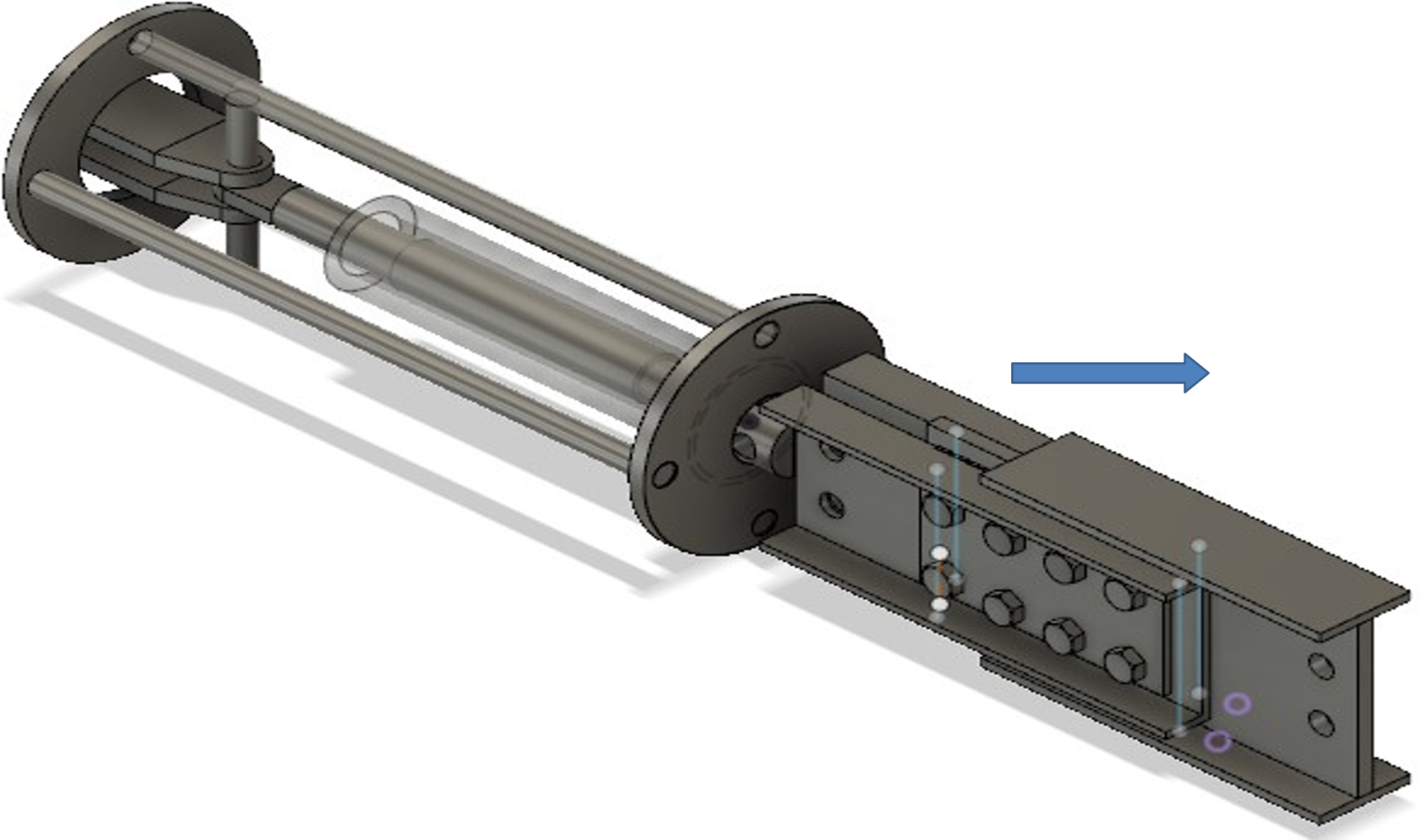
Hybrid Damper (HD)
The Hybrid Damper (HD) is an advanced energy dissipation device that combines multiple damping mechanisms—such as frictional hysteresis and viscous damping—within a single system to provide optimized structural response control under a wide range of dynamic loading conditions.
By leveraging the complementary characteristics of different damping technologies, the HD delivers continuous energy dissipation during low-amplitude excitations such as wind and operational vibrations, while progressively mobilizing additional hysteretic energy dissipation under severe seismic demands. This multi-stage response significantly reduces inter-storey drift, floor accelerations, structural force demands, and residual deformations, thereby enhancing both serviceability and seismic resilience.
The HD is particularly suited for Performance-Based Seismic Design (PBSD), high-rise buildings, industrial facilities, bridges, and critical infrastructure where multiple performance objectives must be satisfied across different hazard levels. Its configurable architecture allows individual damping mechanisms to be calibrated for project-specific performance requirements.
Due to the complex interaction of velocity-dependent and hysteretic nonlinear behaviors, accurate analysis of HD-equipped structures requires advanced nonlinear modeling techniques beyond the capabilities of conventional design software. To address this, a proprietary in-house analytical platform has been developed to simulate the coupled response of the hybrid damping system, optimize damper parameters, and support high-fidelity performance-based structural design.
The HD provides a next-generation solution for seismic protection and vibration control, delivering enhanced energy dissipation, superior adaptability, improved structural resilience, and optimized lifecycle performance.