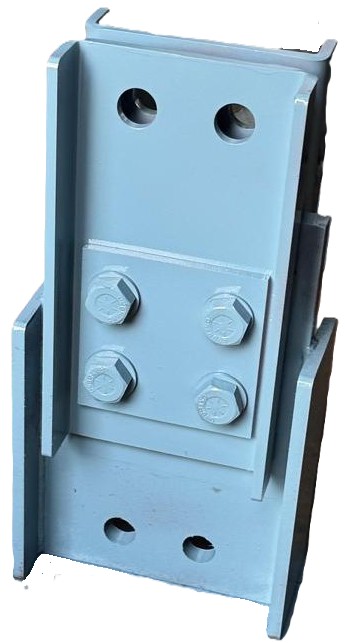
A Friction Damper is a passive energy dissipation device designed to enhance the dynamic performance and resilience of structures subjected to seismic and other transient loading conditions. Operating on the principle of Coulomb friction, it dissipates input energy through controlled sliding between engineered friction interfaces, converting mechanical energy into heat.
Once the predefined slip load is reached, the damper activates and exhibits stable hysteretic behavior, efficiently reducing structural vibrations, inter-story drifts, and force demands on primary structural elements. By concentrating energy dissipation within dedicated damping components, friction dampers help maintain the elastic integrity of the main structural system and minimize damage during extreme events.
Friction dampers require no external power, sensors, or active control systems, offering exceptional reliability, durability, and low maintenance requirements. Their customizable slip load and friction characteristics enable performance-based tuning for specific project demands, making them a highly effective solution for both new constructions and structural retrofitting applications.